

The Wounded Healer

Along with many people on Substack, I'm writing about grief. In my case, specifically, the loss of a child. A simple review of Substack content shows many articles have been written by people who have experienced serious health conditions, tragic losses, or are caring for a family member in a dire situation. I can't ascribe a motive to all of these creators, but I imagine they've experienced some sort of pain and want to share their knowledge and experience with others who find themselves in similar situations. In doing so, there's a hope that it will ease some of their readers' burden and allow for some healing.
When we act in this way, we can be described as "Wounded Healers."
Carl Jung’s Archetypes
The claim that the Wounded Healer is part of human nature isn't mine; it was made famous and expanded on by the psychiatrist Carl Jung. He, in turn, was inspired by ancient Greek literature. So, the Wounded Healer isn't a new idea, but Jung fleshed it out for the contemporary world. Jung was a student of Sigmund Freud but arguably went on to create a far more interesting and fully formed ideal of what the human psyche may possibly be. He was probably one of the most brilliant thinkers in psychology in the 20th century and introduced ideas such as the collective unconscious. Jung believed that there's a shared memory bank for all humanity. Jung’s ideas aren't easy to follow and require some study to begin to understand; nevertheless, it's worth the time. A good place to start is his autobiography, Memories, Dreams, Reflections.
The Collective Unconscious: A Blueprint for Life
As I grappled with the profound impact of loss, I found resonance in Carl Jung's concept of the collective unconscious, which he saw as a shared blueprint for human experience. It's filled with universal patterns he called archetypes. These aren't fully formed ideas, but more like instincts or natural tendencies that show up in our dreams, myths, fairy tales, and even everyday life. They're why certain stories or symbols resonate with people across different cultures and times. For me, the deep, almost primal need to understand and process my grief felt like one of these universal patterns, a journey I knew others had embarked on too, even across different cultures.
Some of these archetypes have been adopted and more broadly understood in society. For example, The Persona is like the mask we wear in public, showing the world what we want it to see. The Shadow represents the parts of ourselves we hide or deny – often the less desirable traits, but not always, which is an important distinction. Then there are the Anima (the inner feminine in men) and the Animus (the inner masculine in women), which influence our relationships and how we express ourselves. The most important archetype for Jung was the Self, which represents the unified, whole person, a state of balance and completeness often symbolised by a circle or a mandala. Our own pursuit of healing, and the desire to help others find their own balance, feels deeply connected to this striving for 'the Self' in the face of immense challenge. By exploring these archetypes within us, we can gain an ability to isolate aspects of our behaviour, motivations, and feelings and give them a name. The hope is that this will lead to deeper self-awareness and help us work through some of our inner conflicts. He believed that understanding these archetypes was key to becoming a complete and increasingly balanced individual, a process he called individuation.
The Wounded Healer Archetype
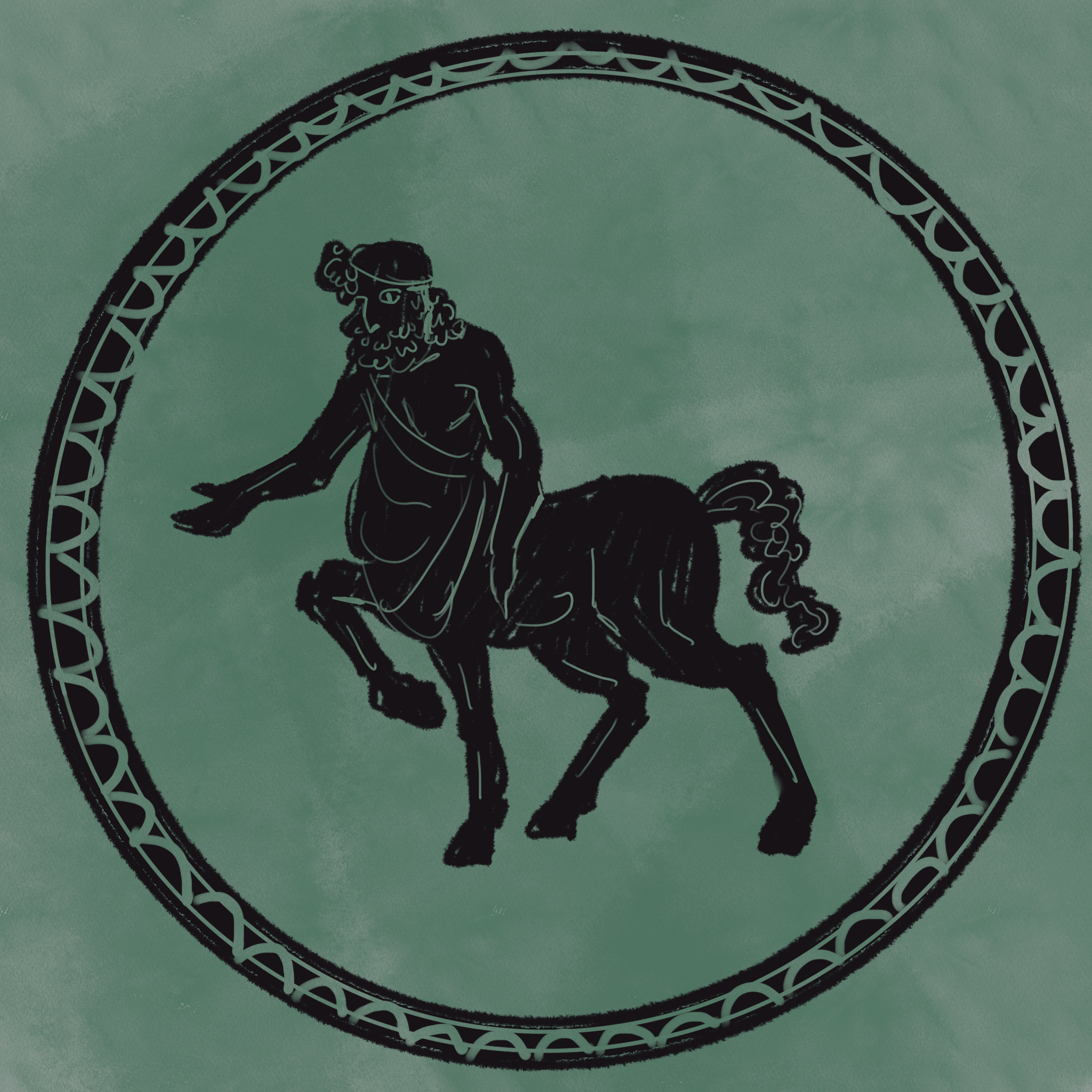
Among the many archetypes Jung identified that shape our personalities and experiences, the Wounded Healer holds particular significance for anyone who has been wounded in life. Jung was influenced by the ancient Greek myth of Chiron, a centaur (half-man, half-horse). Despite his great wisdom and skill as a teacher and healer to heroes, Chiron suffered an incurable wound from a poisoned arrow. He was a healer who carried an unhealable wound, and this deeply resonated with Jung. He saw in Chiron a profound symbol of how our own personal experiences of pain, illness, or trauma, when acknowledged and engaged with, don't diminish us. Instead, they can become the source of our deepest empathy and our capacity to genuinely help others.
A Perfect World
Clearly, the content of my Substack is being designed to help others who have lost a child. I want them to suffer the least amount possible when they're faced with the many different facets of grieving. I'd like them to avoid as many of the pitfalls that I fell into. In some small way, I would aid another person's healing. It's not a one-way street; I must be getting something out of writing, otherwise I wouldn't do it. In return, I hope to aid healing myself.
In a perfect scenario, anyone reading Beyond the Expected who has suffered child loss would immediately identify with most of the articles. Their reaction would never be negative to anything I've written, and even if it was, in time, they would come to realise the valuable lessons they had learned. Unfortunately for us all, it's not a perfect world, and as much as my ego would love the thought that my writing had the power to heal the masses, it probably hasn't. I'm struck with the need to write carefully and with honesty about these topics. One of the reasons why I never write about suicide (which is a major cause of early death in young men) is that I won't be able to do it with enough poise. The simple fact is I haven't experienced it up close, so I haven't been wounded by it. I haven't had years to contemplate its effects. I can talk about a rapid illness stealing your healthy child away from you and most of what that might entail. I can certainly discuss how this loss impacts your life over a 10-year period.
Substack's Wounded Healers
Substack is a relatively new platform for people to share ideas and interact. The fact that many choose to express the part of their persona that is the Wounded Healer isn't new. If we're to accept that Carl Jung was onto something, then maybe we should expect many creators to want to help others. It's probably one of the most natural things we can do when we've been deeply wounded. This is why I share my story here, knowing that my own experience, though painful, can serve others on similar paths.
It's very easy to despair at what can occur in the world and focus on the darker elements of our nature. I do have to remind myself that if I'm to accept all that is naturally bad about humanity, then I must also accept what is good. I shouldn't take it for granted that I can help myself by helping others. In what capacity and how depends on how I've been wounded and who needs help at that time. Hopefully, it can be a truly worthy endeavour for everyone involved when we express the very natural parts of ourselves…the desire to help.